
A Legacy of Gratitude
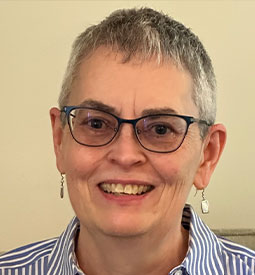 |
Through a planned gift to create an endowed lectureship in palliative and supportive care, Dr. Joanne Douglas will ensure that the care which has sustained her continues to reach others.
By Sarah Creel Mitchell
Joanne T. Douglas, Ph.D., speaks with an attention, intention, and discipline most people will never have to practice. For the past 18 years, she has been living with nonfluent/agrammatic primary progressive aphasia (nfvPPA), a rare neurodegenerative brain disorder that is eroding her ability to use language and will eventually leave her unable to read, write, or speak.
Douglas is a scientist and a former professor at the University of Alabama at Birmingham (UAB). From the earliest weeks of her difficulties with language, she has been a patient of the UAB Center for Palliative and Supportive Care. Through a generous planned gift, Douglas will establish an annual lecture series within the Marnix E. Heersink School of Medicine (HSOM) devoted to one of medicine’s most undervalued and underfunded fields.
Once the Joanne T. Douglas Endowed Lectureship in Palliative and Supportive Care is fully funded, the remaining portion of Douglas’ gift will establish a flexible, spendable fund the center can direct as needs arise.
Both gifts spring from Douglas’ gratitude for the care she received from Elizabeth A. Kvale, M.D., MSPH—former director of the supportive care and survivorship clinic UAB and now Section Chief of Geriatrics and Palliative Medicine at Baylor College of Medicine—and the dedicated clinicians at the center. “It was very clear to me that I wanted to use the financial security I’d received from UAB to give back to UAB,” Douglas said.
It is a testamentary gift, a bequest that will be realized through her estate. And it is, in the most literal sense, a legacy: a way of speaking long after she is no longer in the room to speak for herself.
A scientist’s gratitude
A faculty member in the UAB Department of Pathology, Douglas began to experience progressive difficulty with language in June 2008, shortly after her 44th birthday. In October 2008, Douglas began seeing Dr. Kvale in the supportive care and survivorship clinic (within the Center for Palliative and Supportive Care).
Up to this point, Douglas’ life’s work had been built on precision—on the fluent, careful use of language to describe what she observed and what she knew. Then, as she put it, her “speech started to become increasingly effortful and halting,” and she found herself “closing [her] eyes to focus on speech production and using hand gestures to cue [her] words.”
To describe what was happening, she coined a term that still feels is painfully exact: “a quota of words.” In conversation now, she sometimes closes her eyes—not to withdraw but to gather language before the quota is exhausted. She is practiced at this. She has had to be.
Most people with nfvPPA, Douglas noted, are told nothing can be done and receive little or no follow-up care. UAB did the opposite. None of her UAB doctors had ever treated anyone with the condition, but rather than turning her away, they committed to learning how to treat her.
“My doctors initiated a program of personalized, person-centered care for me,” Douglas said. “They refused to entertain the idea that nothing could be done to help me, simply because I have an incurable, progressive brain disorder.”
This refusal is the foundation that the rest of Douglas’ story is built upon.
A partnership, not an ending
Eighteen years as a patient undoes the assumption most people bring to the word “palliative.”
“It’s not just end-of-life care,” said Rodney Tucker, M.D., MMM, FAAHPM, Director of the UAB Center for Palliative and Supportive Care and Christine S. Ritchie Endowed Chair in Palliative Care Leadership. “It’s an interdisciplinary partnership for patients with serious illness and their families to improve quality of life. Because if you can improve quality of life and improve symptoms while also honoring patients’ wishes, people can live longer. And even if they don’t live longer in terms of time, they feel like they live longer because the quality of their life has improved.”
For Douglas, her experience with the Center for Palliative and Supportive Care did something a diagnosis rarely does: it preserved her sense of purpose. Early in her care, her physicians asked what she wanted her legacy to be and emphasized purpose as a contributor to brain health and well-being—a signal, she said, that her medical team “didn’t think that my role as a productive member of society had ended with my diagnosis.”
She held onto a goal that predated her illness and survived it intact: “to make the best possible use of [her] ability.” In the almost 20 years since, she has published five peer-reviewed medical papers on her own experience of the disease and the ground-breaking personalized and person-centered care she has received, writing now in the eight minutes per day her condition allows.
How the lectureship came to be
Douglas’ generosity did not begin with this gift. Shortly after her diagnosis, she began donating a percentage of her income each month to the center’s compassion fund, which helps cover patients’ specific needs. Around the same time, she pledged a planned testamentary gift, funded by a provision in her will and by naming UAB the beneficiary of her 403(b) retirement plan—the same plan she paid into as a UAB employee, with her contributions matched by the university.
Because she pledged a percentage rather than a fixed amount, the value grew. “These assets have grown,” Douglas said, “which has given me the opportunity to expand the scope of my planned gift.” It is, she notes with a scientist’s appreciation of the quantifiable, “the power of compounding.”
Compounding allowed Douglas to expand the scope of her generosity too. She knew she wanted to give to the center, and she wanted Tucker to tell her what would help most. Their discussions revealed the idea of a lectureship that would allow professionals working within palliative and supportive care to come together to discuss innovations and therapies that have benefited their patients.
At the heart of the lectureship lies Douglas’ dogged quest for productivity and helpfulness, a sense that something can be done within the field to help those with a neurodegenerative diagnosis. Tucker and his colleagues wholeheartedly agreed.
What the gift establishes
The endowed lectureship is built to last and built to range.
“It is a way to perpetuate the dissemination of palliative and supportive care knowledge,” Tucker said. By design, it is not fixed to a single topic; it is meant to move across the many ways supportive and palliative care can help patients with any progressive neurologic disease.
“It opens up a lot of possibilities,” Tucker said, “by turning attention to a field that rarely commands funding or a spotlight. It also carries Dr. Douglas’ name and sense of purpose forward with it.”
Douglas almost established the gift anonymously and said that the decision to attach her name to the funds did not come easily. “I’ve always believed that you shouldn’t let your left hand know what your right hand is doing,” she said, “but I realized that it might be helpful for the clinicians at the center to know that they had a patient who was incredibly grateful for what she had received—and that it might give them some encouragement.”
This is exactly what a planned gift like Douglas’ can do. A bequest allows a donor to commit to something larger than the present moment—which, following a diagnosis, can often be difficult to focus on—and enables that commitment to keep giving in perpetuity.
Palliative and supportive care, which spans diseases and has long sat outside the usual National Institutes of Health channels of research funding, depends on just this kind of generosity to advance.
“We have an endowment for palliative care that comes directly from the community,” Tucker said, “and this money helps disseminate palliative care and its evidence base and even seeds the early pilot studies that build the case for it.”
Douglas’ lectureship will reinforce this cause not for her own sake but as a standing reminder of her gratitude for the people who have cared for her and what this care has made possible.
For someone who measures her words by the day, she has chosen a remarkably enduring way to keep speaking.
© Pentera, Inc. Planned giving content. All rights reserved.
Disclaimer